
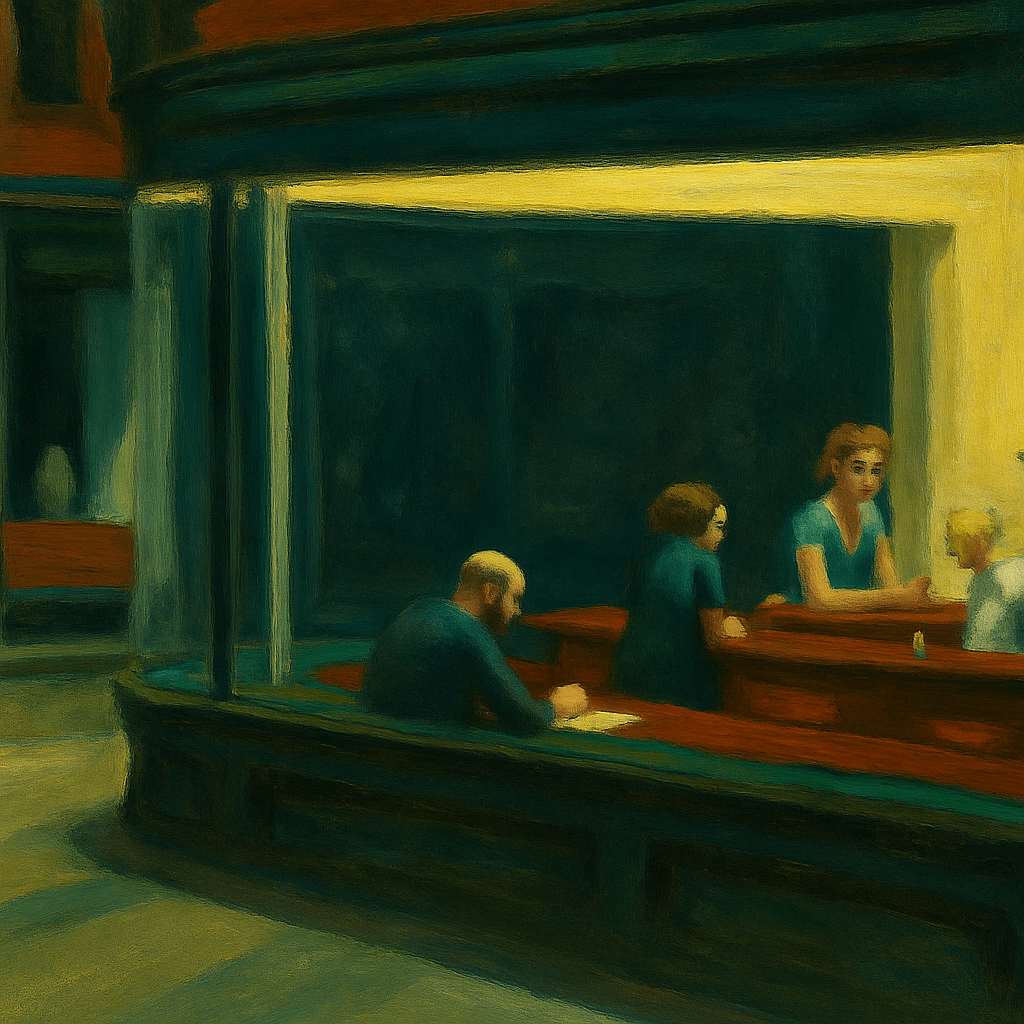
In a time when political debate often slips into hostility, and history is either weaponized or forgotten, I chose to start this blog — not because I hold all the answers, but because I believe in the power of thoughtful questions.
This blog is not neutral. It is grounded in principles. But it is also not dogmatic. It is driven by a commitment to clarity, to context, and to the possibility of democratic renewal — not just in the United States, but in the broader conversation we share as citizens of an increasingly fragile political world.
I. My Position, Openly
I am not American, but I write about America because it remains, for better and for worse, a central actor in the drama of global democracy. I write from a position shaped by education in history, by a long-standing fascination with the founding ideas of the United States, and by a conviction that values such as liberty, accountability, pluralism, and justice are not the property of any one party, nation, or ideology.
Culturally, I admire the ambition of the American experiment — not just the Constitution, but the imagination behind it. Politically, I stand for the protection of democratic norms, the rule of law, and public institutions as instruments of the common good. Economically, I believe in balancing individual initiative with structural fairness, and in resisting both authoritarian populism and unregulated oligarchy.
Above all, I reject fatalism.
II. Why This Blog?
In recent years, the United States has experienced deep internal fractures — institutional, cultural, epistemological. But what affects America affects the world. What happens to the legitimacy of the American presidency, to the independence of its judiciary, to the inclusiveness of its economy — echoes far beyond its borders.
I created US Politics and History not to preach, but to contribute. The format is intentional: longform essays, grounded in history, structured around analysis rather than outrage. I try to connect present challenges to deeper dynamics — to ask not only what is happening, but why, and how did we get here.
This is, in some sense, a civic act. I do not write to win a debate. I write to help shape one worth having.
III. On Tone and Practice
If there is one red thread in my work, it is this: that ideas matter more than tribal allegiance.
That’s why I strive to engage with people across the spectrum. I’m not interested in scoring points. I’m interested in understanding how power operates, how truth is shaped, and how civic trust is eroded or rebuilt.
This means avoiding easy binaries — right vs. left, elite vs. people, tradition vs. progress. Democracy lives in the tension between opposing forces. It’s a system built not for purity, but for compromise. And yet, that compromise only works if citizens are willing to meet in the space between certainty and curiosity.
That’s the space I try to inhabit here.
IV. On Language, AI, and Learning
I write this blog in English, a language that is not my mother tongue. That choice is deliberate — not just to reach a wider audience, but as an act of intellectual discipline. Writing in another language requires effort: to expand vocabulary, to refine tone, and to avoid repetition or awkward constructions that might cloud the meaning.
For that reason, I occasionally use AI tools — not to translate, and certainly not to generate content ex nihilo (except when generating article images), but to help shape more natural and nuanced expressions in a higher register of English. This process is not passive. I compare formulations, reflect on tone, and take note of vocabulary choices and stylistic adjustments. In a very real sense, it becomes a form of language learning — an ongoing course in precision, rhythm, and clarity.
Far from replacing my voice, this assistance strengthens it. The ideas, the structure, and the perspective remain mine. But the final expression is enriched — not only by technology, but by the curiosity and discipline that come with writing outside one’s native language.
V. Where I Hope This Leads
I’m not building a platform. I’m building a space.
A space for those who are tired of noise but still want to engage. A space for those who think the past is not irrelevant, and that democracy, while flawed, is still worth defending. A space for dissent that is respectful, for disagreement that is productive, and for reflection that is honest.
If you’ve read this far, thank you.
Welcome to the conversation.

 USPH
USPH 
Leave a comment